




Suspected Vietnam-Linked Hackers Target Southeast Asia in South China Sea Espionage Campaign

A Vietnam-sponsored hacking group has been attributed to attacks targeting Southeast Asian military, government, and legislative organizations with an aim to gather intelligence on South China Sea defense and military agreements. The previously undocumented incursion set, detailed by SOCRadar, has


Microsoft Store App Found Delivering Vinci RAT Capable of Remote System Control

Cybersecurity researchers have disclosed details of a cyber attack in which a threat actor leveraged a Microsoft Store application to deliver a remote access trojan (RAT) called Vinci RAT. The intrusion, according to eSentire, begins with a redirection to a

How to Keep Your Security Picture Current When Attackers Move at AI Speed

Most security metrics are not built to be used. They are built to be shown. Somewhere between the quarterly review and the next status update, a set of numbers gets assembled that looks reassuring in a room and tells almost

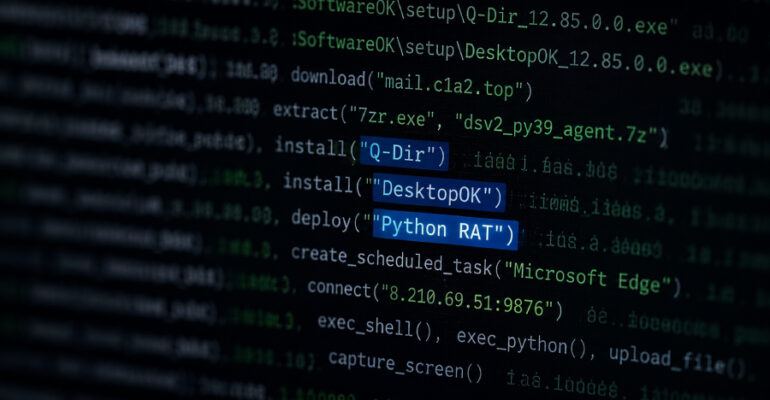
Hackers Trojanize Official Q-Dir and DesktopOK Downloads to Deliver Remote Access Malware

Cybersecurity researchers have disclosed details of a software supply chain attack that has tampered with Q-Dir and DesktopOK installation files distributed via the official SoftwareOK website. “Evidence indicates that malicious files were generated not only when users downloaded the programs

Switzerland Confirms AI-Assisted Cyberattacks Breached Critical Infrastructure Operators

Attackers using AI agents have broken into computer systems at Swiss organizations in four of five confirmed attacks, the first such cases in the country, the country’s cybersecurity agency said yesterday. Three of the attacks targeted critical infrastructure operators, and

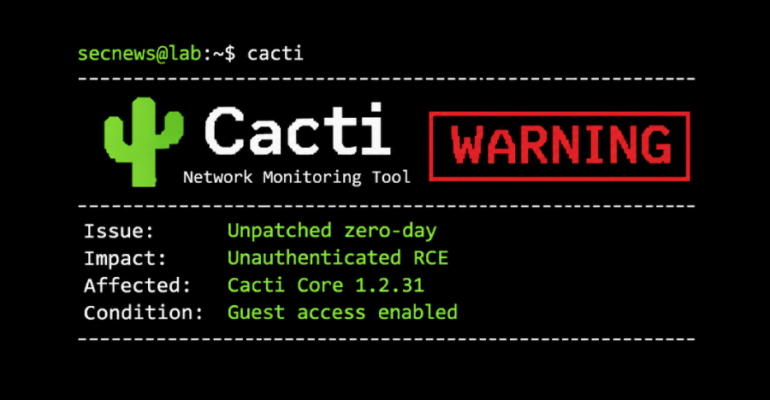
Unpatched Cacti Zero-Day Enables RCE in Just Four HTTP Requests via Guest Access

Details have emerged about a new zero-day vulnerability in Cacti, an open-source network monitoring tool, that could be exploited to achieve remote code execution. The proof-of-concept (PoC) exploit, which has yet to be assigned a CVE identifier, has been tracked